Why this is normally simpler than probate
A house held in a trust usually sells more easily than one in probate, because the trust exists to avoid the court step. The trustee has authority already. What is left is the ordinary business of selling a property that may not have been touched in years.
That said, no trust is identical to another. The trust document governs what the trustee can do, and the attorney who drafted it is the person to confirm that with. We will ask to see the sections covering authority to sell, and so will title.
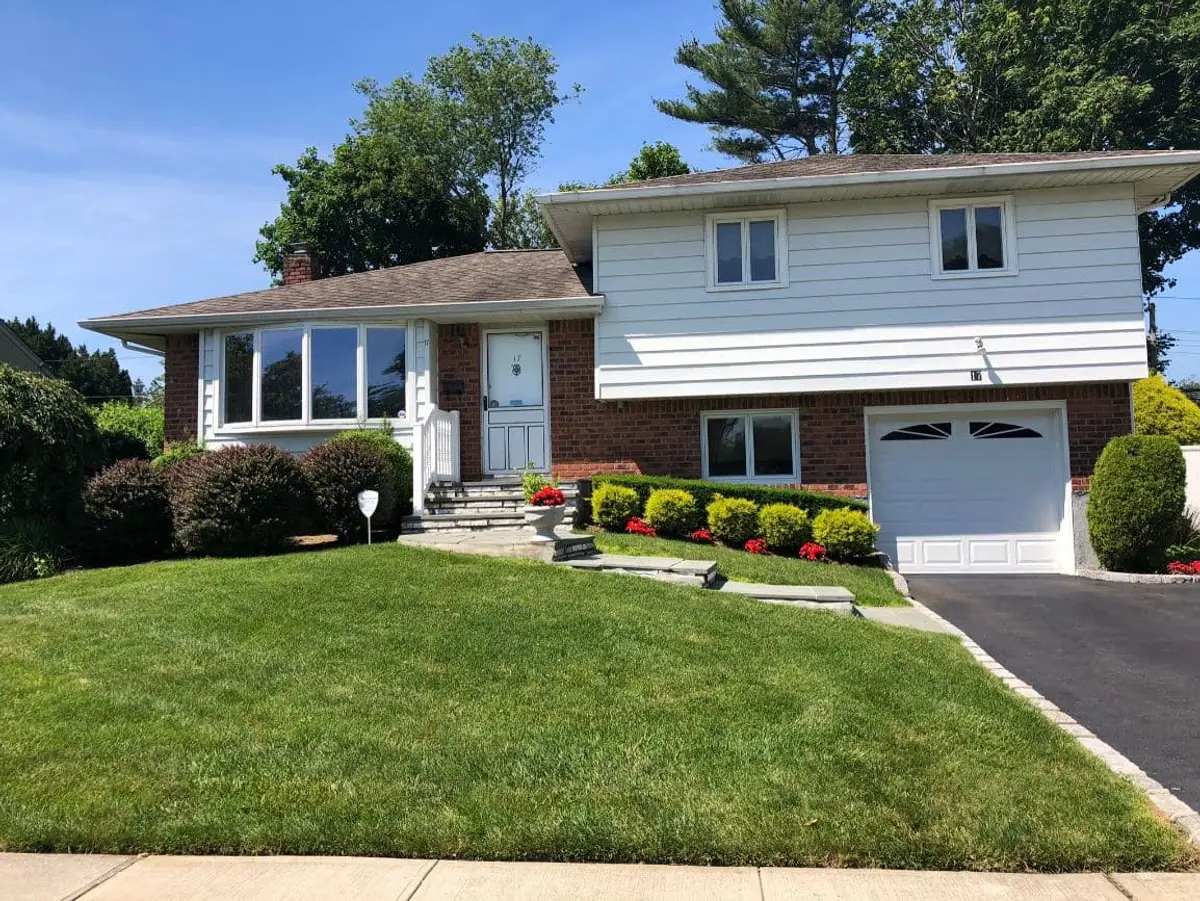
Where our experience with trust property helps
The useful thing we bring to a trust sale is that nothing about it is unusual to us. An empty house, a trust nobody has read in years, a successor trustee unsure what they are allowed to sign.
We will give you a firm number for a Plainview property in its current condition and hold it while the trust paperwork gets sorted out. There is no lender on our side setting a clock, so the trustee can take the time the trust document requires without the deal falling apart underneath them.
What this looks like in Plainview specifically
Plainview is roughly 27,100 people in Nassau County, ZIP 11803, and the housing stock is mostly ranch, split-level, hi-ranch. Around Old Country Road and Manetto Hill Road, most of it is old enough that the mechanicals are on their second or third life. We know which of these streets take water, where the older systems fail first, and what the Plainview-Old Bethpage Central School District does to a resale price.
The median is up 10.23% year over year as of 2026-05. A firming market gives you a little room for error on price, which is worth more than it sounds when the house is not in showable condition. At a $970,000 median, Plainview buyers are paying enough that they expect the house to be finished. A dated kitchen is a deduction in a cheaper market and close to disqualifying in this one, which is why unrenovated houses here sit while the renovated ones move. The median house here goes under contract in about 28 days, which is quick for Long Island. It is also a figure that only applies to property in showable condition.
The trust property is usually what nobody maintained
Trusts get set up carefully and then the property inside them gets forgotten. By the time a trustee is selling, the house has often been empty a while, or occupied by somebody who was not maintaining it, or tenanted under an arrangement nobody wrote down.
All of that is ordinary for us. We buy trust property in whatever state the years left it in, and none of it reduces the number after the fact.
What the trust property is realistically worth today
The median house in Plainview sold for $970,000 and took about 28 days to go under contract, then another 45 to 60 days waiting on the buyer's mortgage. That is 73 to 88 days in total, for a house that was ready to show on day one. If the property has been held in the trust for decades, the number in everyone's head may be badly out of date in either direction.
We will tell you what we see, and if a straightforward listing would do better for the beneficiaries we will say that instead. That is a more useful answer than a figure designed to get us the house.
How selling a house held in a trust in Plainview works
- 1
You give us the address
The street address in 11803 and a sentence or two about the condition, by phone or the form. No photos needed, and nothing has to be cleaned or repaired first.
- 2
One short visit
One of us comes by once, usually for less than half an hour. On a ranch or split-level like most of Plainview, what we look at closely is the roof, the boiler and the wiring, not the finishes.
- 3
A written offer within 24 hours
One figure, in writing, inside 24 hours. Not a range. Show it to a Nassau County agent if you want a second view; if the house is already in good enough shape to list, an agent may get you more, and we will say so.
- 4
The date is up to you
Close quickly, or set a date months ahead to fit probate, a tenant or your own move. Either way there is no 73 to 88 days of a Plainview listing looking for a buyer and waiting on a mortgage approval.
Successor trustee, and why it matters to the sale
Authority is the first question in any trust sale, and it is a question for the trust document and the trust attorney rather than for a buyer.
A successor trustee usually holds the same power to sell that the original trustee held, but the proof required is different. Sort that out at the beginning. It is a straightforward piece of work when it is done early and a genuine problem when a Plainview closing is already scheduled.
What title will ask for
The document list for a trust sale is short and predictable: the trust instrument or a certification of trust, evidence that you are the acting trustee, and ID.
We ask for it early for one reason. Every delay we have seen on a trust closing in Plainview came from paperwork that could have been gathered in week one and was gathered in week five instead.
How we arrive at a number on a house held in a trust
For a house held in a trust, the starting point is the price once it is fully repaired. We subtract what the repairs cost and then a margin for being wrong about the price or the repairs. No algorithm and no trade secret: that is how the number is built.
- What it is worth repaired. Not the Plainview median of $970,000 on its own, but what houses like yours on your street actually closed at recently.
- What the work costs. Roof, boiler, electric, the kitchen and bath. In Plainview the stock is largely ranch and split-level, and on houses that age the mechanicals are usually the expensive part rather than the cosmetics.
- How long we will hold it. The median Plainview house goes under contract in about 28 days once it is showable, then waits 45 to 60 days more on the buyer's lender. Ours has to get to showable first, and we carry taxes and insurance across the whole of it.
- What we are wrong about. Every renovation turns up something nobody could see on the walk-through. We build that risk into the price, and it explains a good part of why cash offers come in below retail.
Where our margin actually comes from
Plainly, because buyers are often vague here: we run millions of dollars of construction a year. At that volume we pay contractor prices for materials and keep steady crews working twelve months a year, so a given renovation costs us roughly half of what a homeowner pays for the same job.
That is where our margin is. It is also why fixing the house up yourself first rarely pays off. You would be paying retail for the work and counting on the sale price to cover it, and it usually does not. We earn our money on the construction side, not on the price we pay you.
If the figure does not work, say so; we would rather know than try to talk you round. We will look at what is going on and tell you honestly which options make sense, including the ones without us. Listing with an agent is the better route for plenty of sellers, and we will tell you if it is yours.
The question we will always send you elsewhere with
There is usually one tax question sitting under a trust sale that nobody has asked out loud yet. Ask it early.
A CPA who has seen the trust document can tell a trustee what the sale is likely to mean for the beneficiaries, and that sometimes changes the timing or the structure. It is a short engagement and it is worth the money. We will happily coordinate our timeline around it.
Common questions
Do you need to see the trust document?
The parts establishing the trustee's authority to sell, yes. Title will require it regardless of who buys the house.
Irrevocable or revocable, does it matter to you?
Not to the mechanics of our offer. It may matter a great deal to the tax treatment on your side, which is a question for the trust attorney and an accountant.
Can a successor trustee sell a Plainview house without going to court?
Usually yes, provided the trust grants the authority and you can prove you are the acting trustee. The trust document governs, so get the attorney to confirm it in writing before you sign anything.
Do the beneficiaries have to agree to the sale?
It depends entirely on how the trust was written. What we can do either way is give the trustee one written number that every beneficiary can look at simultaneously, which tends to shorten the conversation considerably.
Will you buy a Plainview trust property that has been empty for years?
That is most of what we see. Empty Plainview houses, deferred maintenance, contents nobody has dealt with. None of it changes the number after we have given it to you.